Decorative Concrete
Once your new garage floor has cured, decorative coatings and finishes can protect the surface and transform the look of the space.
Learn more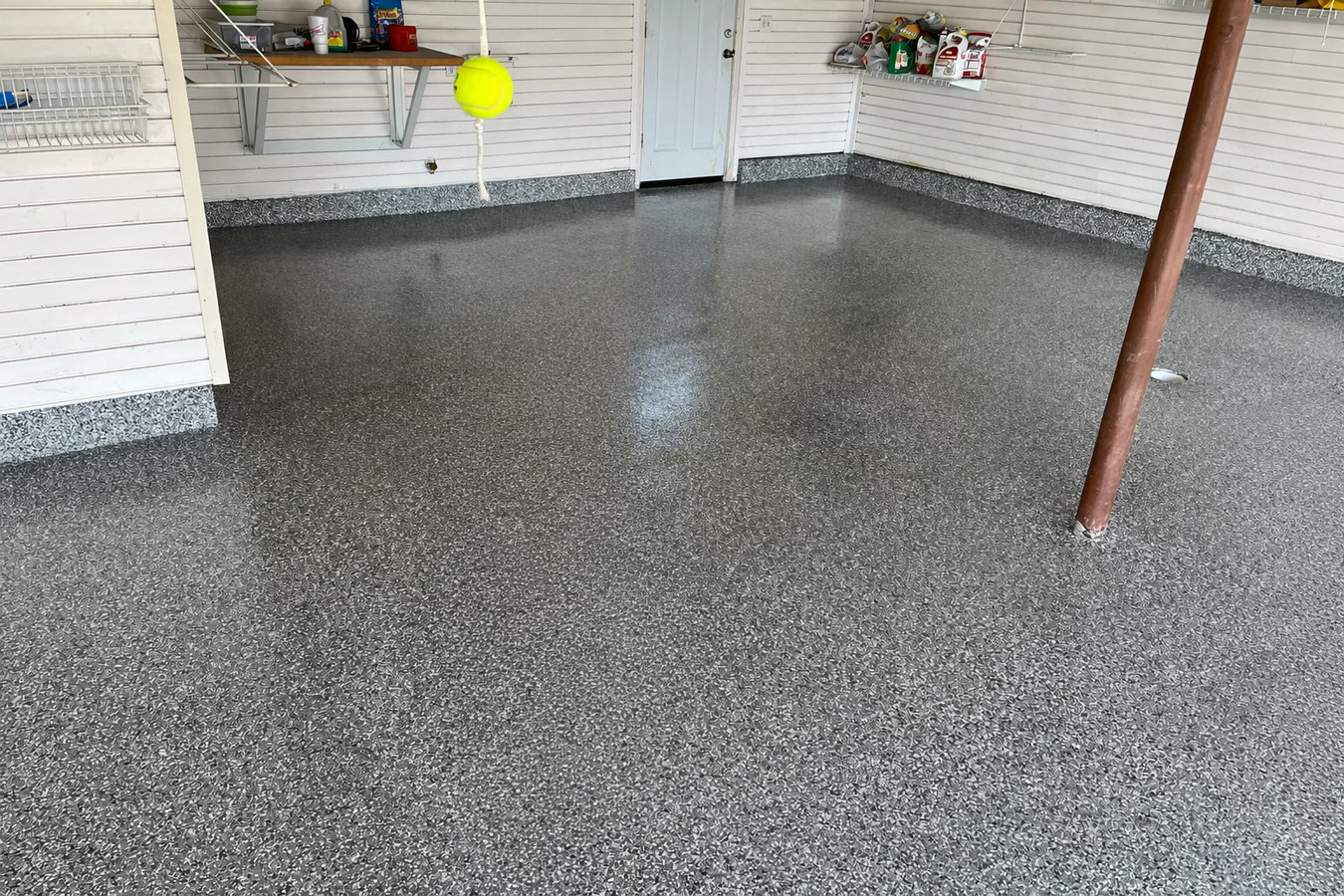
Cracked, heaving, or crumbling garage floor? We pour new slabs built for the desert - proper base prep through caliche soil, reinforced concrete, and early-morning scheduling to beat the heat.
Garage floor concrete in Lake Havasu City starts with removing the old slab or preparing bare soil, then pouring fresh reinforced concrete - most residential garage floors take one to two days of active work, with vehicles back inside after about seven to ten days.
If your current floor is cracking, dusting, or has sections that feel raised or soft underfoot, those problems usually trace back to the ground underneath - not just the surface. Lake Havasu City homes from the 1970s through the 1990s often have aging slabs sitting over soil that was never fully addressed. Patching covers the symptom; replacing the slab with proper base prep fixes the actual problem.
Homeowners often combine a garage floor replacement with decorative concrete finishes or coatings once the new slab has fully cured - a natural next step if you want a finished look that holds up to heat, oil, and regular use.
Small hairline cracks are common, but cracks you can slip a pencil tip into - especially ones that keep growing - mean the slab is moving and the base beneath it has shifted. In Lake Havasu City, this often ties back to caliche and sandy soil layers that settle unevenly over time. Watching it get worse is not a strategy; the underlying problem does not fix itself.
If sweeping kicks up a fine gray powder, or if the floor feels rough and is visibly flaking apart, the top layer of the concrete is breaking down. Lake Havasu's extreme heat and UV exposure accelerate this deterioration, especially on older slabs that were never sealed. Resurfacing buys time, but a slab that is crumbling throughout needs replacement.
A garage floor should slope toward the door or a drain point. Water sitting in puddles in the center or corners means the floor settled unevenly over time. Standing water speeds up concrete deterioration and can encourage mold on stored belongings - it is more than an inconvenience.
A visible hump or a section that feels noticeably higher than the rest means the slab has been pushed upward by soil movement or moisture pressure. This is a known issue in caliche-heavy soil like much of Lake Havasu City. A raised section is a tripping hazard and a sign the root cause needs to be dealt with - not patched over.
Every garage floor project starts with site prep - removing the old slab if there is one, grading and compacting the base material, and setting forms to define the edges. In Lake Havasu City, that base work also means checking for caliche layers and addressing any drainage issues before a single yard of concrete goes down. We use reinforced mixes with steel wire mesh or rebar, pour at four or five inches thick depending on the loads you need to support, and cut control joints into the surface to give the concrete a planned place to move as it cures.
Finish options range from a standard steel-trowel or broom finish to a smooth surface ready for an epoxy or sealer coating. We also handle concrete floor installation for other interior spaces, so if you have a workshop, laundry room, or additional covered area that also needs a concrete floor, we can include it in the same project.
Best for homeowners who want a clean, durable floor without the extra cost of a decorative coating.
Suited for homeowners planning to add an epoxy or polyurea coating after the full 28-day cure period.
For floors with structural problems, multiple cracks, or old slabs that have settled beyond repair.
Lake Havasu City regularly hits temperatures above 110 degrees in summer, and that heat changes how concrete work gets done. Fresh concrete in those conditions can dry out on the surface long before it has cured underneath, producing a weak slab that cracks within the first season. Every project we schedule during warm months gets an early-morning start time, and we use active curing management - covering the slab and slowing moisture loss - to make sure the finished floor performs the way it should. The low humidity here, unique to the Mojave Desert, also pulls moisture out of fresh concrete faster than almost anywhere else in the country.
The caliche soil throughout Lake Havasu City and nearby Bullhead City also creates challenges below the slab that most contractors in other regions never have to deal with. Caliche traps water, and water trapped beneath a garage floor heaves it upward over time. Proper base preparation - sometimes including excavation through the caliche layer - is not optional here; it is the difference between a floor that lasts 30 years and one that needs attention in five.
We respond within 1 business day. We will ask a few quick questions - garage size, whether there is an existing floor, and if you have noticed any drainage or cracking issues. No pressure, no obligation.
We come to your property, look at the existing floor or bare ground, check drainage slope, and assess the base conditions. You get a detailed written quote that covers demolition, prep, the pour, and finishing - no surprise line items.
Before work begins, the garage needs to be completely empty. The crew removes the old slab if needed, grades and compacts the base, and sets up forms. This prep work - often done the day before the pour - is what most determines the long-term quality of the floor.
Pour day starts early in warmer months. The crew places the concrete, embeds reinforcement, screeds the surface flat, and finishes to the texture you have chosen. Control joints are cut in shortly after. A standard two-car garage pour and finish typically takes a few hours - then curing begins.
We respond within 1 business day. There is no obligation after your estimate. Once you submit, someone from our office will call to schedule a free on-site look at your space.
(928) 392-1386We schedule every summer job with an early-morning start and active curing protection - two steps many contractors skip. The American Concrete Institute's hot-weather concreting guidelines back this approach, and our Lake Havasu pours hold up through years of extreme heat.
We assess the soil conditions under every garage before we pour anything. If caliche or poor drainage is present, we address it - not after the slab cracks, but before a single truck arrives. It costs a little more upfront and saves you a lot more later.
Our license through the Arizona Registrar of Contractors is current and verifiable at roc.az.gov. That means you have state-backed recourse if anything goes wrong - something you give up entirely when you hire an unlicensed crew to save a few hundred dollars.
We work throughout Lake Havasu City and the surrounding region. Every project gets a written quote with no hidden fees, a clear start date, and a final walkthrough before we call the job complete.
Knowing the local soil, the local heat, and the local permit process makes a real difference on a garage floor job. Those are the details that separate a floor that holds up for decades from one that needs attention within a few years.
Arizona requires concrete contractors to be licensed through the Arizona Registrar of Contractors. The American Concrete Institute publishes hot-weather concreting guidelines that inform how responsible contractors approach summer pours. For permit questions, contact the City of Lake Havasu City Community Development Department directly.
Once your new garage floor has cured, decorative coatings and finishes can protect the surface and transform the look of the space.
Learn moreWe install concrete floors in workshops, covered patios, laundry rooms, and other interior or semi-enclosed spaces beyond the garage.
Learn moreSummer booking fills up fast - call today to lock in an early-morning pour date and get a written estimate before the schedule closes out.